
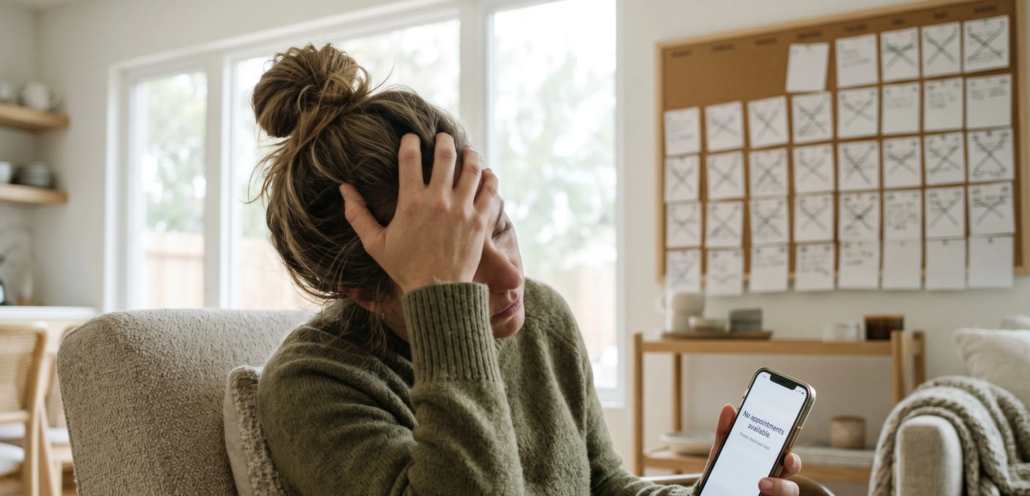
Why Is It So Hard to Get a Doctor’s Appointment in California
Getting a timely doctor’s appointment in California has become increasingly difficult for patients across the state. In regions like Orange County, Los Angeles, Riverside, and San Diego, wait times of six to ten weeks for a primary care appointment are common, even for patients with concerning symptoms that need prompt attention.
The problem is structural. California faces one of the most significant physician shortages in the country, compounded by an oversaturated patient base, an administratively heavy healthcare system, and a primary care model that prioritizes volume over access.
This guide breaks down exactly why the system works this slowly and what you can actually do about it.
The Patient Panel Problem
The most direct answer to why it is so hard to get a doctor’s appointment comes down to patient volume.
The average primary care physician in the US manages a panel of around 2,300 patients, and that number is expected to increase. California compounds this with a statewide shortage that pushes existing physicians to absorb even more demand. Research from UCSF estimates that a primary care physician would need to work 21.7 hours per day to deliver all recommended acute, chronic, and preventive care to a panel of 2,500 patients. The math does not work, and patients feel it directly in their wait times.
The compensation structure makes this worse. Physicians in traditional practices are paid based on the volume of patients seen, which means reducing panel size to improve access would cut their income. Smaller panel sizes lead to shorter wait times and longer visits for patients, which improves care, but encouraging primary care physicians to have smaller panels makes it harder for patients to find a provider at all.
The 15 Minute Appointment Model
Even when you get an appointment, what you get is a fraction of what you need.
The standard primary care visit is scheduled for 15 minutes. That includes the physician reviewing your chart before walking into the exam room, listening to your concerns, conducting an exam, documenting the visit, and writing any prescriptions or referrals. In reality, the face-to-face time is often closer to 10 minutes.
This model works for a simple refill or a single issue. It does not work for complex symptoms, chronic disease management, or the kind of preventive conversation that actually keeps people healthy. But practices are reimbursed based on volume, not complexity. The financial incentive is to keep visits short and keep the schedule full.
When every patient gets 15 minutes regardless of their needs, the schedule stays packed, and new appointments stay weeks away.
The Workforce Shortage Across Southern California
California faces a significant primary care physician shortage, and Southern California is no exception.
The Association of American Medical Colleges projects a nationwide shortage of primary care physicians in the tens of thousands by the end of the decade. California already ranks near the bottom nationally in primary care physicians per capita. In regions like the Inland Empire and parts of Los Angeles County, the shortage is even more acute.
Fewer physicians mean fewer appointment slots. Fewer slots mean longer wait times. Longer wait times mean patients turn to urgent care or emergency rooms for issues that should have been handled in a primary care setting. That drives up costs and further fragments care.
When you ask why it is so hard to get a doctor’s appointment in Orange County, Riverside, or San Diego, the workforce shortage is a major part of the answer. There simply are not enough primary care physicians to meet the demand.
The Administrative Burden
Your physician spends as much time on documentation as they do on patient care.
Prior authorizations. Insurance forms. Electronic medical record documentation. Billing codes. Referral coordination. The administrative load on primary care physicians has ballooned over the past decade. Studies show physicians spend nearly two hours on administrative tasks for every hour of direct patient care.
That administrative burden does not create more appointment slots. It takes physicians away from clinical time. It contributes to burnout, which drives physicians out of primary care entirely. And it means the appointment slots that do exist are harder to access because the system surrounding them is so inefficient.
The Consolidation Effect
Over the past decade, healthcare systems across Southern California have consolidated independent practices into large health systems.
Consolidation was supposed to improve coordination and efficiency. In practice, it often creates more layers between patients and their physicians. Centralized call centers replaced local front desks. Appointment scheduling became a standardized process that prioritized system metrics over individual patient needs.
Patients who used to call their doctor’s office and speak to someone who knew them now navigate automated phone trees and speak to schedulers who work miles away. The personal connection eroded. Appointment availability became a system-wide bottleneck rather than a local practice decision.
The Consequences of These Structural Problems
The consequences of these structural problems show up in real ways for families across the region.
A working parent in Irvine cannot get a sick child seen for days.
A professional in Newport Beach postpones a concerning symptom because scheduling a visit requires rearranging work around a slot six weeks out.
A retiree in Palm Springs with multiple chronic conditions manages their health without a primary care physician who has time to coordinate their specialists.
When care is hard to access, patients delay care. Delayed care means conditions worsen. Worsening conditions mean more complex treatment down the line. The system becomes reactive rather than proactive, and everyone pays the price in health outcomes and cost.
How Concierge Medicine Fixes What’s Broken
Concierge medicine wasn’t designed to slightly improve healthcare; it was built to replace the parts that don’t work.
Smaller patient panels. Bigger access
Instead of juggling 2,000 patients, a concierge physician cares for just 300–500. That shift changes everything. Suddenly, getting care isn’t a struggle. Same-day or next-day appointments become the norm, not a rare exception.
Time that actually belongs to you
Forget rushed 15-minute visits. Concierge appointments last as long as they need, 30 minutes, an hour, or more. You’re not squeezed into a schedule. Your doctor has the time to listen, think, and solve, not just move on to the next patient.
Direct access. No barriers
No call centers. No phone trees. No waiting on hold.
You can reach your physician directly, by phone or text, when you need them. Simple, immediate, human.
A doctor who manages your care, so you don’t have to
In traditional systems, you’re left coordinating everything yourself. Not here.
Your concierge physician handles the big picture, communicating with specialists, reviewing reports, and ensuring nothing falls through the cracks. You stop being the middleman and go back to being the patient.
Care that comes to you
In-home visits aren’t a luxury; they’re part of the model. No waiting rooms. No commuting. Just personalized care, delivered where you’re most comfortable, by a doctor who already knows your story.
What You Can Do
If you are tired of asking why it is so hard to get a doctor’s appointment, you have options. Direct primary care and concierge medicine both offer solutions. Direct primary care gives you affordable access to a primary care physician with a smaller panel. Concierge medicine gives you that access plus broader services like in-home visits, advanced preventive care, and hands-on specialist coordination. The right choice depends on your health needs, your budget, and how much coordination you want your physician to handle.
