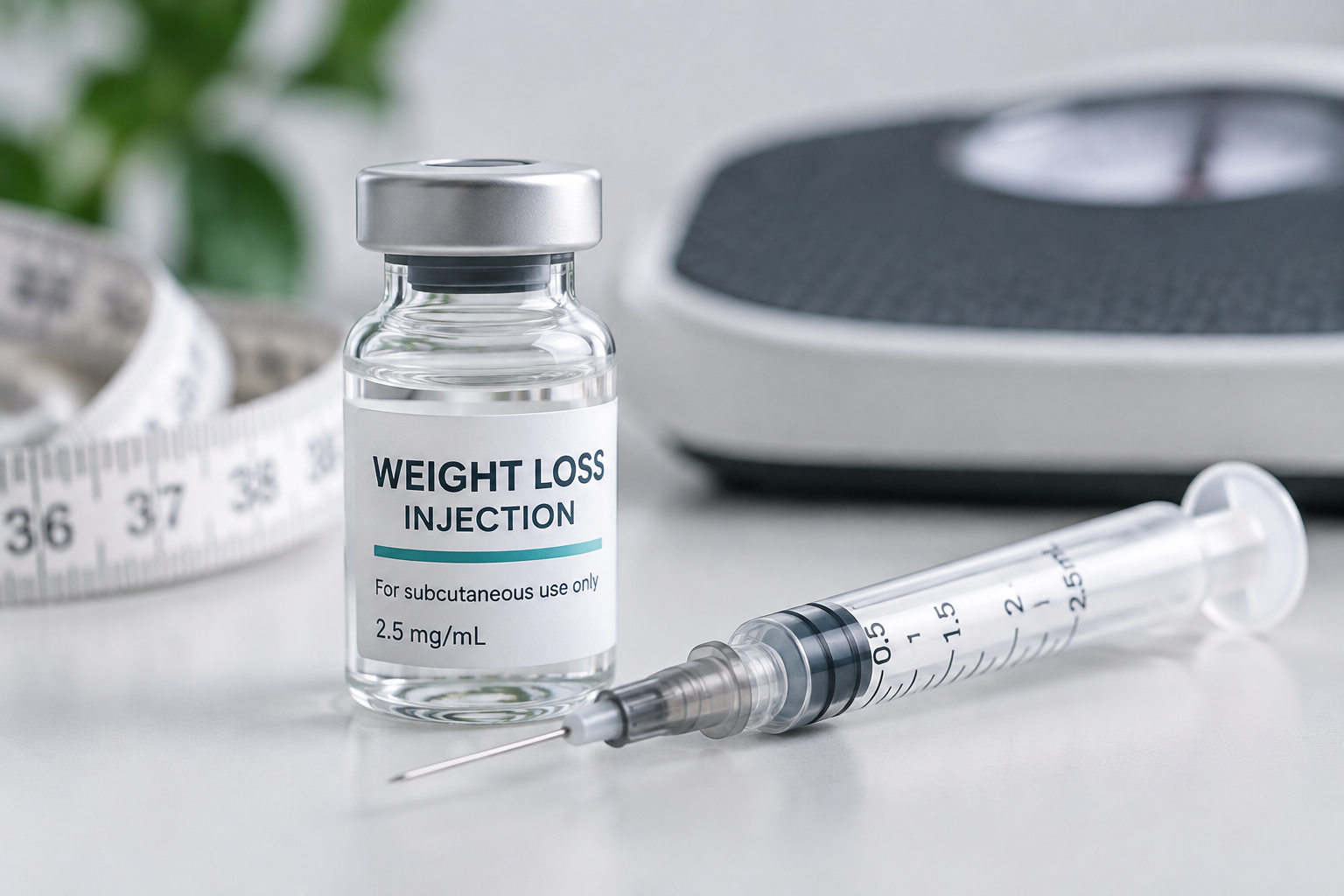
If you have been comparing these two, the confusing part is that they contain the same medicine. Both contain semaglutide, and both come from the same company. What separates them is the dose and what the FDA approved each one to treat. Wegovy is approved for weight loss and can be titrated to higher doses, while Ozempic is approved for type 2 diabetes and stops at a lower dose.
That difference is why people on Wegovy lose noticeably more weight in studies. Neither is available over the counter. Both require a prescription, and a doctor must review your medical history before writing one.
Our physicians in Southern California have this conversation with patients almost every week. Most arrive having read a dozen conflicting articles, unsure which medicine to ask for and quietly worried they will be judged for asking at all. That is the reason we put this guide together.
Unify Care is a concierge medical practice serving Orange County, Los Angeles, Riverside, Palm Springs, San Bernardino, and San Diego. Our concierge weight loss therapy has supported more than 500 families across the region, with in-home visits and 24/7 access to a physician.
Here is what we tell patients when they ask which one is better.
How Semaglutide Works
Semaglutide acts on the receptors for GLP-1, a hormone your gut releases after you eat. It lowers appetite and calorie intake, and it slows how quickly food leaves your stomach.
Both medicines are once weekly injections. Both brands also have a daily pill. The Wegovy pill is approved for weight loss. The Ozempic pill, previously sold as Rybelsus, is approved for type 2 diabetes only.
Wegovy
Wegovy is approved to reduce excess body weight and maintain weight loss in adults with obesity, in adults with overweight and at least one weight-related condition, and in children aged 12 and older with obesity. It is also approved to lower the risk of heart attack, stroke, and cardiovascular death in adults with heart disease and either obesity or overweight. It is also approved to treat MASH, a fatty liver condition, with moderate to advanced scarring in adults.
The standard maintenance dose is 2.4 mg a week. Wegovy HD, a 7.2 mg dose approved in March 2026, is for adults who have taken 2.4 mg for at least 4 weeks and need additional weight loss.
Ozempic
Ozempic is approved for adults with type 2 diabetes to improve blood sugar. It is also approved to lower the risk of major cardiovascular events in adults with type 2 diabetes and heart disease. It is also approved to lower the risk of kidney function decline, kidney failure and cardiovascular death in adults with type 2 diabetes and chronic kidney disease.
The highest dose is 2 mg a week. Weight loss is not on the Ozempic label, so prescribing it for weight loss alone is off-label.
Wegovy vs Ozempic at a Glance
How Much Weight You Can Expect to Lose
Study averages give a starting point. Your own result depends on your dose, starting weight, health history and how well you tolerate the medicine.
In the same 72-week trial, people taking 2.4 mg lost 17.5% by the same measure. For a person weighing 220 pounds, 14.9% is roughly 33 pounds and 20.7% is roughly 46 pounds.
These numbers come from different studies with different participants and lengths, so they are not a direct comparison. The Ozempic studies enrolled people with type 2 diabetes, and the Wegovy label states that people with type 2 diabetes lose less weight on Wegovy than people without it.
Dosing Schedule
Both medicines start low and increase slowly to reduce stomach side effects. Both are injected under the skin of the abdomen, thigh or upper arm, on the same day each week, at any time of day, with or without food. You can change your injection day as long as doses are at least 2 days apart. Rotate the injection site.
Ozempic: 0.25 mg for 4 weeks, then 0.5 mg. The 0.25 mg dose is a starting dose and is not effective for blood sugar control. If more control is needed, the dose can go to 1 mg after at least 4 weeks on 0.5 mg, and to 2 mg after at least 4 weeks on 1 mg. The earliest you can reach 2 mg is week 13.
Wegovy: 0.25 mg, 0.5 mg, 1 mg, and 1.7 mg, each for 4 weeks. The 2.4 mg maintenance dose begins at week 17. Maintenance can also be 1.7 mg if 2.4 mg is not well tolerated. If a dose is hard to tolerate, escalation can be delayed by 4 weeks. Wegovy HD 7.2 mg requires at least 4 weeks at 2.4 mg first, so the earliest start is week 21.
Side Effects
Most side effects affect the stomach. They are most common during dose increases and often ease with time.
These figures come from separate trials in different groups of people, so they should not be compared directly.
Wegovy HD can cause more side effects than 2.4 mg. In trials, nausea occurred in 39% versus 35%, and vomiting in 22% versus 16%. Wegovy HD can also cause altered skin sensations such as tingling, burning or sensitivity, called dysesthesia. It was reported by 22% of people taking 7.2 mg and 6% taking 2.4 mg. Tell your physician if this happens, because a dose change may help. Hair loss was reported by 3.3% of people taking Wegovy 2.4 mg, compared with 1% on placebo.
If nausea is affecting your daily life, call your physician before stopping. Staying longer at a lower dose can help, and some people do well at a dose below the maximum.
Serious Risks and Who Should Not Use These Medicines
Both medicines carry the FDA's boxed warning for thyroid C-cell tumors. In rodents, semaglutide caused these tumors. It is not known whether it does in humans. Neither medicine should be used if you or a family member has had medullary thyroid cancer, or if you have multiple endocrine neoplasia syndrome type 2 (MEN 2). Neither should be used after a serious allergic reaction to semaglutide.
Contact your physician right away for any of the following:
- Severe stomach pain that does not go away, with or without vomiting, which may spread to the back. This can be a sign of pancreatitis.
- Pain in the upper stomach, fever, or yellowing of the skin or eyes. These can be signs of gallbladder problems.
- Vomiting or diarrhea that will not stop. Dehydration can lead to kidney injury.
- Swelling of the face, lips or throat, trouble breathing, or a severe rash. These can be signs of a serious allergic reaction.
- Changes in vision, especially if you have diabetes.
- Signs of low blood sugar, such as shakiness, sweating, confusion or a fast heartbeat. The risk is higher if you also take insulin or a sulfonylurea.
Wegovy can raise resting heart rate, so report palpitations or a racing heartbeat at rest. Neither medicine is recommended in people with severe gastroparesis. Ozempic is not for type 1 diabetes. Never take Wegovy, Ozempic or any other GLP-1 medicine together.
Pregnancy and Breastfeeding and Weight Loss Shots
Do not take Wegovy or Ozempic while pregnant. In animal studies, semaglutide was linked to pregnancy loss and birth abnormalities. Human data are not enough to define the risk. The Wegovy label states that weight loss offers no benefit during pregnancy and may harm the baby. If you become pregnant while taking Wegovy for weight loss, stop it and contact your physician.
Semaglutide stays in the body for weeks after the last dose. Both labels advise stopping at least 2 months before a planned pregnancy. The Wegovy label applies this to men as well as women, and the Ozempic label refers to women. If you have type 2 diabetes, you will need a plan to keep your blood sugar controlled during pregnancy, because poorly controlled diabetes also carries risks.
There are no data on semaglutide injections in human milk or on their effect on a breastfed infant. Your physician will weigh the benefits of breastfeeding against your need for the medicine. Breastfeeding is not recommended while taking the Wegovy pill.
In studies, semaglutide did not meaningfully change how the body absorbs oral birth control pills. Tirzepatide, a different medicine, does require a backup method. Tell your physician before starting if you are pregnant, planning a pregnancy or breastfeeding. Novo Nordisk runs a pregnancy registry for people exposed to Wegovy during pregnancy.
Muscle Loss During Weight Loss
Weight loss of any kind takes some lean tissue, including muscle, along with fat. The Wegovy label states that semaglutide lowers body weight with greater fat mass loss than lean mass loss. In a body composition analysis of the STEP 1 trial, fat mass fell 19.3% and lean body mass fell 9.7%. Lean mass made up a larger share of total body weight at the end than at the start.
Studies of GLP-1 medicines estimate that about a quarter to two-fifths of the weight lost is lean tissue. Eating enough protein and doing strength training help protect muscle. We include nutrition guidance and strength training in every plan.
Cost and Insurance
Cost depends on your insurance, your dose and whether you pay through the manufacturer's cash program. Insurers commonly cover Ozempic for type 2 diabetes and often decline it for weight loss. Wegovy coverage varies by plan and usually requires prior authorization. Prices change often, so we keep separate guides with current figures. Read our guides to Wegovy costs in California and how much Ozempic costs. We check your coverage before any prescription is filled.
Your Evaluation at Unify Care
Both medicines require a prescription, so the first step is a medical evaluation.
- Metabolic assessment. We test fasting blood sugar, HbA1c, insulin and a lipid panel. This can find undiagnosed diabetes or prediabetes, which affects both the choice of medicine and insurance approval.
- Thyroid and hormones. An underactive thyroid, the transition into menopause and low testosterone can affect weight. Semaglutide does not treat these conditions, so we check for them.
- Medical history. We ask about thyroid cancer in you or your family, pancreatitis, gallbladder disease, diabetic eye disease, kidney disease and pregnancy plans.
- Medication review. Insulin and sulfonylureas can cause low blood sugar and may need lower doses. Semaglutide also slows stomach emptying, which can affect how some oral medicines are absorbed.
- Coverage check. We verify your benefits before you fill anything.
If a GLP-1 medicine suits you, we manage your semaglutide injections for weight loss from the first dose through every adjustment.
Frequently Asked Questions
What should I do if I miss a dose?
For Ozempic, take the missed dose as soon as possible within 5 days. After 5 days, skip it and take the next dose on your regular day.
For Wegovy injections, take the missed dose as soon as possible if your next dose is more than 2 days (48 hours) away. If it is less than 2 days away, skip the missed dose. If you miss two or more doses in a row, ask your physician whether to resume or restart the dose schedule.
For the Wegovy pill, skip the missed dose and take the next one the following day. Never take two doses close together to catch up.
Can I drink alcohol on these medicines?
The labels do not list an alcohol restriction. Alcohol may add to stomach upset, and it can lower blood sugar in people who take insulin or a sulfonylurea. Ask your physician what is safe for you.
What should I tell a surgeon or dentist before a procedure?
Tell them you take a GLP-1 medicine, and do so well before the date. These medicines slow stomach emptying. There are rare reports of food or liquid entering the lungs during anesthesia or deep sedation, even when patients followed fasting instructions. The current labels state that the data are not enough to recommend changing fasting rules or pausing the medicine, so your anesthesia team will decide.
What if my insurance says no?
A denial is not always final. Some plans approve on appeal when a weight-related condition is documented. The manufacturer's cash program is another option, though it is not open to people with Medicare, Medicaid, TRICARE or VA benefits. In some cases, a different medicine in the same class has better coverage.
Is compounded semaglutide the same as Wegovy or Ozempic?
No. Wegovy and Ozempic are FDA-approved products. A compounded semaglutide preparation is not FDA approved because it contains semaglutide. Talk with your physician before using one.
How do I store and travel with the pens?
Store unused Ozempic pens in the refrigerator at 36°F to 46°F. After first use, an Ozempic pen can be kept for 56 days at 59°F to 86°F or in the refrigerator. Wegovy pens are refrigerated, and before the cap is removed, they can be kept at 46°F to 86°F for up to 28 days. Never use a pen that has frozen.
When flying, keep pens in your carry-on, since cargo holds can freeze. Bring your prescription label. Do not leave pens in a parked car, especially during Southern California summers.
Talk It Through With a Physician
The right choice depends on your lab results, other conditions, medications, pregnancy plans, and insurance coverage. Our board-certified physicians handle the evaluation and stay with you through every dose adjustment, with home visits and 24/7 telehealth access across Southern California. Contact us to book a visit.
This article is for education and does not replace medical advice.
Sources
- U.S. Food and Drug Administration. Wegovy (semaglutide) Prescribing Information. https://www.accessdata.fda.gov/drugsatfda_docs/label/2026/215256s031lbl218316s003lbl.pdf
- U.S. Food and Drug Administration. Ozempic (semaglutide) Prescribing Information. https://www.accessdata.fda.gov/drugsatfda_docs/label/2025/209637s035,209637s037lbl.pdf
- U.S. Food and Drug Administration. FDA approves fourth product under National Priority Voucher program, higher dose semaglutide. March 19, 2026. https://www.fda.gov/news-events/press-announcements/fda-approves-fourth-product-under-national-priority-voucher-program-higher-dose-semaglutide
- ClinicalTrials.gov. STEP UP: Semaglutide 7.2 mg in Adults With Obesity. https://clinicaltrials.gov/study/NCT05646706
- National Library of Medicine. Weight Regain and Cardiometabolic Effects After Withdrawal of Semaglutide: The STEP 1 Trial Extension. https://pubmed.ncbi.nlm.nih.gov/35441470/
- Wilding JPH, et al. Impact of Semaglutide on Body Composition in Adults With Overweight or Obesity: Exploratory Analysis of the STEP 1 Study.
- Novo Nordisk. Ozempic pill, the only FDA approved oral peptide GLP-1 medication for adults with type 2 diabetes. https://www.prnewswire.com/news-releases/novo-nordisks-ozempic-pill-the-only-fda-approved-oral-peptide-glp-1-medication-for-adults-with-type-2-diabetes-soon-to-be-available-in-the-us-302760106.html