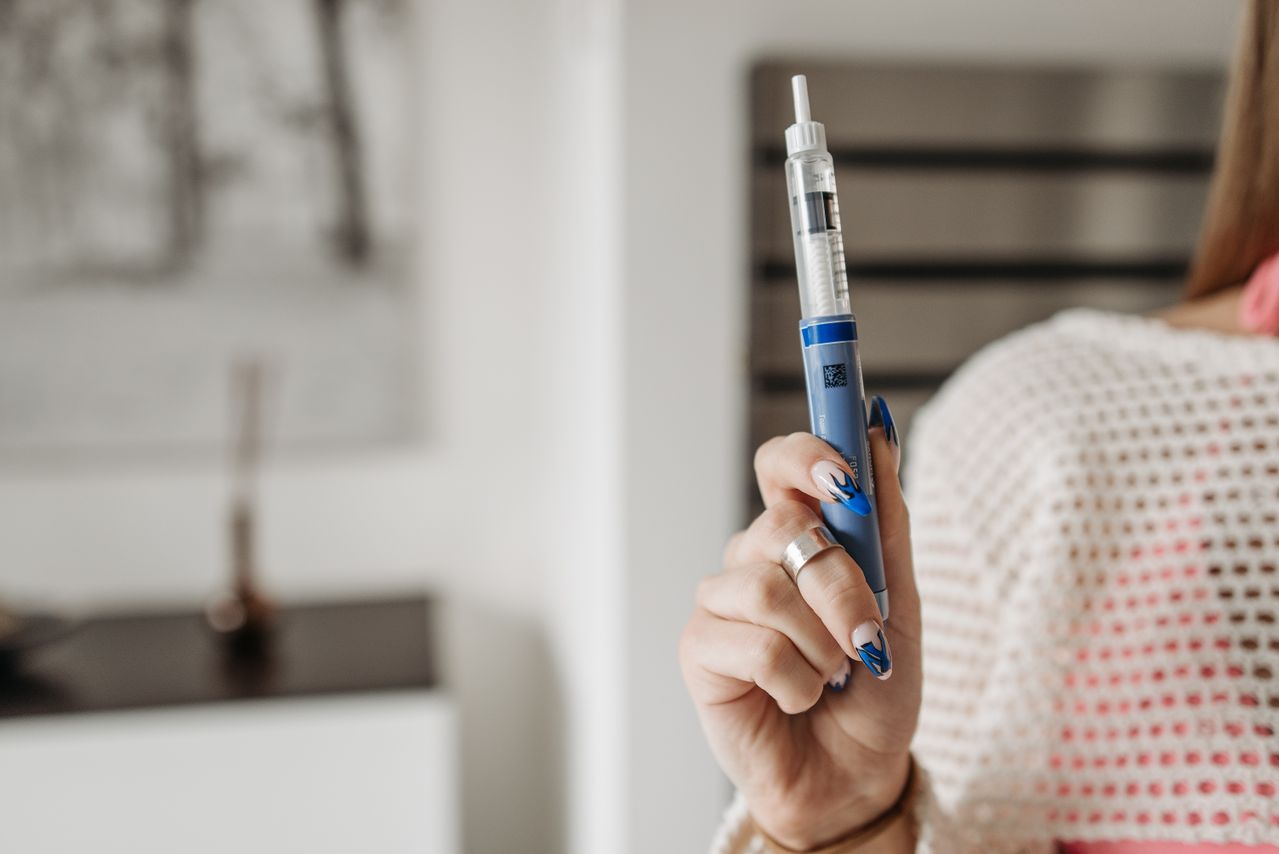
Ozempic works for weight loss by copying GLP-1, a gut hormone your body releases after meals that tells your brain you have had enough. You feel full sooner, food stays in your stomach longer, and cravings lose their grip, so you eat less without forcing it. In Novo Nordisk's diabetes trials, adults on Ozempic 1 mg lost between 10 and 12 pounds over 30 to 56 weeks.
One point matters before the rest. Ozempic carries FDA approval to treat type 2 diabetes, to lower the risk of heart attack and stroke in adults who also have heart disease, and to slow kidney disease in adults who also have chronic kidney disease. Weight loss is not on that list. Prescribing it for weight loss alone is an off-label use, and the same drug at a higher dose is sold as Wegovy, which is approved for weight management.
Three mechanisms drive the weight loss:
- Ozempic lowers your appetite by acting on hunger centers in the brain.
- Ozempic slows how fast food leaves your stomach, mostly right after meals.
- Ozempic changes how your brain responds to food, so cravings fade.
Here is how each one works, followed by how long it takes, how much weight people lose, and what happens when the injections stop.
1. Ozempic Lowers Your Appetite by Copying a Natural Fullness Hormone
Your intestines release GLP-1 after you eat, and its job is to signal that enough food has arrived. Semaglutide, the active ingredient in Ozempic, is a GLP-1 analogue that shares 94% of its structure with the natural hormone and binds the same receptor.
Natural GLP-1 breaks down within minutes. Semaglutide sticks to albumin in your blood, which protects it from breakdown and stretches its half-life to about one week. One injection keeps that fullness signal running at a steady level for seven days instead of a few minutes after each meal.
GLP-1 receptors sit in brain regions that regulate hunger and fullness, so the signal reaches the part of you that decides whether to keep eating. Many patients describe portions that used to feel small starting to feel like plenty. The change happens at the hormonal level rather than through willpower, which is why appetite drops even on weeks when motivation does not.
2. Ozempic Slows Digestion So Food Stays in Your Stomach Longer
Ozempic delays how quickly food moves out of your stomach in the period right after a meal. The FDA label describes this as a delay in early postprandial gastric emptying, which also slows how fast sugar from that meal enters your bloodstream.
Fullness lasts longer as a result. Instead of hunger returning two hours after lunch, it may hold off for four or five. Across a whole day, that adds up to fewer calories eaten without any deliberate restriction on your part.
This mechanism is also behind the nausea that shows up early in treatment. Your stomach is working more slowly than it is used to, and starting at a low dose with gradual increases is what keeps that manageable.
Ozempic differs from tirzepatide on one practical point here. In clinical pharmacology trials, semaglutide did not affect the absorption of oral medications to any clinically relevant degree, including metformin, warfarin, digoxin, atorvastatin, and combined oral contraceptives. The label still advises caution, so keep your prescriber's list of your medications current.
3. Ozempic Changes How Your Brain Responds to Food and Cravings
This is the mechanism most people do not expect, and for many patients it is the one they notice most. GLP-1 receptors in the brain reach circuits involved in reward and craving, alongside the ones that track fullness.
High-calorie, highly processed food starts to lose its pull. Patients often describe it as food noise going quiet. That means the constant mental chatter about what to eat next, and the pull toward something sweet after a meal, both fade into the background.
Some people report they simply forget to eat, or look at a food they used to crave and feel nothing much. The effect is real rather than imagined, and it reflects changes in how the brain processes food-related signals.
How Long Does Ozempic Take to Work for Weight Loss?
Ozempic reaches steady levels in your blood after four to five weeks of weekly injections, according to the FDA label. Some people notice appetite changes within days of the first dose, and others feel nothing for several weeks.
Weight loss runs on a slower clock than appetite because the dose climbs in stages. Dosing starts at 0.25 mg once weekly for four weeks, which is a starter dose that is not expected to move blood sugar or weight much. After that, it goes to 0.5 mg. With at least four weeks at each step, it can then rise to 1 mg and finally to 2 mg, the maximum.
Reaching 2 mg therefore takes a minimum of 12 weeks. In the trials behind the label, weight kept coming off through 30, 40, and 56 weeks of treatment, so judge your results across months rather than weeks.
How Much Weight People Lose on Ozempic in Clinical Trials
Adults with type 2 diabetes lost roughly 8 to 13 pounds on Ozempic across the trials in the FDA label, depending on dose and trial length. Every trial paired the medication with diet and exercise.
How Ozempic Compares With Wegovy for Weight Loss
Wegovy contains the same semaglutide as Ozempic at doses up to three times higher, and it is FDA-approved for weight management. That dose difference is why the weight loss figures look so different.
Semaglutide now comes in several forms, which is worth sorting out before an appointment. Ozempic is a weekly injection for type 2 diabetes, joined in May 2026 by Ozempic tablets in 1.5 mg, 4 mg, and 9 mg for the same condition. Wegovy is the weight loss version, sold as a weekly injection and, since December 2025, as a 25 mg daily pill. Physician-supervised semaglutide injections for weight loss start with a review of which version fits your diagnosis and your coverage.
How Long Do You Have to Take Ozempic?
Plan on long-term treatment rather than a short course. Type 2 diabetes is a chronic condition, so Ozempic is meant to continue as long as it helps your blood sugar. Its heart and kidney benefits also depend on staying on it.
The same logic holds when semaglutide is used for weight. Obesity behaves like a chronic condition, and the appetite effects last only as long as the medication is in your system.
Your dose is not fixed for life. Physicians adjust up or down based on blood sugar, side effects, and how your weight responds. Plenty of people settle at 0.5 mg or 1 mg rather than climbing to the top dose.
What Happens to Your Weight When You Stop Taking Ozempic
Most people regain a large share of their lost weight after stopping semaglutide. Its half-life is about one week, and the drug clears your system roughly five weeks after the last injection. Appetite and cravings come back over the month or two that follow.
The STEP 1 trial extension measured this directly in adults taking semaglutide 2.4 mg. Participants lost an average of 17.3% of their body weight over 68 weeks, then stopped both the medication and the structured lifestyle program:
- One year off treatment, participants had regained two-thirds of the weight they lost, and the regain was still continuing when follow-up ended at week 120.
- Average weight at that point sat 5.6% below the starting point, so roughly one-third of the loss held.
- Improvements in blood pressure, cholesterol, and blood sugar drifted back toward baseline for most measures.
Coming off the medication works better as a planned step than an abrupt one. Build the nutrition and activity habits during treatment rather than after, and talk with your physician about tapering rather than stopping outright. Medical weight loss programs and injections pair GLP-1 therapy with ongoing monitoring. That gives you a structure for the transition well before you hit your goal weight.
Ozempic Side Effects You Should Know Before Starting
Most Ozempic side effects involve the digestive system and show up while the dose is climbing. Here is what the placebo-controlled trials in the FDA label found at the 1 mg dose, with placebo rates for comparison:
- Nausea affected 20.3% of people on Ozempic 1 mg versus 6.1% on placebo, and it was the most common complaint by a wide margin.
- Vomiting affected 9.2% and diarrhea 8.8%, against 2.3% and 1.9% on placebo.
- Abdominal pain affected 5.7% and constipation 3.1%. Postmarketing reports have included severe constipation and intestinal blockage.
- Digestive side effects overall reached 36.4% on 1 mg and 32.7% on 0.5 mg, compared with 15.3% on placebo. Most nausea, vomiting, and diarrhea happened during dose increases, and 3.8% of patients on 1 mg stopped treatment because of them.
- Gallstones were reported in 1.5% of people on 0.5 mg and 0.4% on 1 mg, and in no placebo patients.
- Heart rate rose by an average of 2 to 3 beats per minute.
Serious problems are uncommon and worth recognizing. The label lists acute pancreatitis, which shows up as severe abdominal pain that may spread to your back and does not go away, and acute gallbladder disease. Kidney injury has been reported after prolonged vomiting or diarrhea caused dehydration. In a two-year cardiovascular trial, diabetic retinopathy complications occurred in 3.0% of Ozempic patients versus 1.8% on placebo, with the gap widest among those who already had retinopathy.
Two situations call for a phone call rather than a wait-and-see approach. Vomiting or diarrhea that will not stop puts you at risk of dehydration and kidney problems. Any planned surgery or procedure involving anesthesia also needs to be flagged, since delayed stomach emptying has been linked to rare cases of food entering the lungs.
Southern California heat adds a storage detail. An Ozempic pen in use can sit at room temperature for 56 days, but only up to 86°F. Summer afternoons in Riverside, Palm Springs, and San Bernardino run well past that, so keep pens out of parked cars and stick with refrigeration when in doubt.
Are There Foods to Avoid With Ozempic?
No official list of forbidden foods exists, and the FDA label says Ozempic can be taken with or without food. What does exist is a short list of foods and drinks that tend to make side effects worse or work against the result you are after.
- Greasy and fried foods sit in the stomach the longest, which compounds the delay Ozempic already causes and tends to bring on nausea.
- Large portions are harder on your stomach than smaller ones. Several smaller meals usually feel better than two or three big ones.
- Sugary foods and refined carbohydrates push blood sugar in the direction the medication is working to correct, and they add calories without much fullness.
- Spicy foods bother some people on GLP-1 medications and not others, so treat this one as personal rather than universal.
- Alcohol adds calories, can worsen nausea, and raises the risk of low blood sugar if you also take insulin or a sulfonylurea. Ask your physician where your limit should sit.
Protein and fiber deserve the opposite treatment. Appetite drops sharply on Ozempic, and eating less overall makes it easy to fall short on both, which matters for holding on to muscle while you lose fat. If your appetite has fallen off enough that meals are getting skipped, tell your physician rather than pushing through it.
Who Ozempic Is Right For and Who Should Avoid It
Ozempic fits adults with type 2 diabetes who need better blood sugar control. Its label also covers adults with type 2 diabetes who have established heart disease or chronic kidney disease. For weight loss without diabetes, Wegovy is the approved option. It covers adults with a BMI of 30 or higher, or 27 or higher with a weight-related condition such as high blood pressure or high cholesterol.
Certain conditions rule semaglutide out or call for closer screening:
- A personal or family history of medullary thyroid carcinoma (a rare thyroid cancer) or MEN 2 (Multiple Endocrine Neoplasia type 2) is a contraindication. Semaglutide caused thyroid tumors in rodents, and whether it does the same in humans is unknown.
- Pregnancy, or plans to become pregnant, means stopping. The label advises discontinuing at least two months before a planned pregnancy because semaglutide takes so long to clear.
- Severe gastroparesis, where the stomach already empties very slowly, is a condition the label recommends against.
- A history of pancreatitis calls for a careful risk discussion with your physician.
- Using insulin or a sulfonylurea increases the risk of low blood sugar, so those doses often need to be reduced when semaglutide starts.
- A history of diabetic retinopathy means your eyes should be monitored during treatment.
Blood work tells you more than a BMI number does. A metabolic health assessment checks blood sugar, thyroid function, and insulin resistance. Those results show whether a GLP-1 medication is the right tool or whether something else is driving the weight.
Talking to a Physician About Semaglutide in Southern California
A physician who reviews your labs, medications, and full health history can tell you whether Ozempic, Wegovy, or neither makes sense for your situation. Unify Care's board-certified physicians handle GLP-1 treatment from the first evaluation through dose adjustments, with in-home visits and 24/7 telehealth access. More than 500 families across Southern California use the practice's concierge medicine model, with house calls reaching San Diego, Los Angeles, Riverside, Palm Springs, and San Bernardino. Reach out to the team to book a consultation.
Sources
- U.S. Food and Drug Administration. Ozempic (semaglutide) Prescribing Information, revised October 2025. https://www.accessdata.fda.gov/drugsatfda_docs/label/2025/209637s035,209637s037lbl.pdf
- Wilding JPH, et al. Weight Regain and Cardiometabolic Effects After Withdrawal of Semaglutide: The STEP 1 Trial Extension. Diabetes, Obesity and Metabolism, 2022. https://pubmed.ncbi.nlm.nih.gov/35441470/
- Novo Nordisk. Wegovy HD (semaglutide 7.2 mg) Approved in the US, Providing 20.7% Mean Weight Loss, March 2026. https://www.biospace.com/press-releases/novo-nordisk-a-s-wegovy-hd-semaglutide-7-2-mg-approved-in-the-us-providing-20-7-mean-weight-loss
- Healio. FDA Approves High-Dose Wegovy 7.2 mg for Adults With Obesity, March 2026. https://www.healio.com/news/endocrinology/20260319/fda-approves-highdose-wegovy-72-mg-for-adults-with-obesity
- Novo Nordisk. Ozempic Pill, the Only FDA-Approved Oral Peptide GLP-1 Medication for Adults With Type 2 Diabetes, Available in the US, May 2026. https://www.prnewswire.com/news-releases/novo-nordisks-ozempic-pill-the-only-fda-approved-oral-peptide-glp-1-medication-for-adults-with-type-2-diabetes-soon-to-be-available-in-the-us-302760106.html
- Drugs.com. Wegovy for Weight Loss: Uses, Side Effects, Dosage. https://www.drugs.com/wegovy.html
- Novo Nordisk. Investigational 2 mg Dose of Ozempic Demonstrates Superior Reductions in Blood Sugar vs Ozempic 1 mg (SUSTAIN FORTE), June 2021. https://www.prnewswire.com/news-releases/investigational-2-mg-dose-of-ozempic-semaglutide-injection-demonstrates-superior-reductions-in-blood-sugar-vs-ozempic-1-mg-in-adults-with-type-2-diabetes-in-a-phase-3-trial-301320445.html